Apartment, Multifamily & Rental Property Access Control
Apartment building access control hardware: anti-clone readers with matched fob sets, QR visitor codes, 4G controllers for rentals and UHF tags for gates.
Send us your controller model, card type and install environment. We'll shortlist compatible hardware and quote within 24 hours.
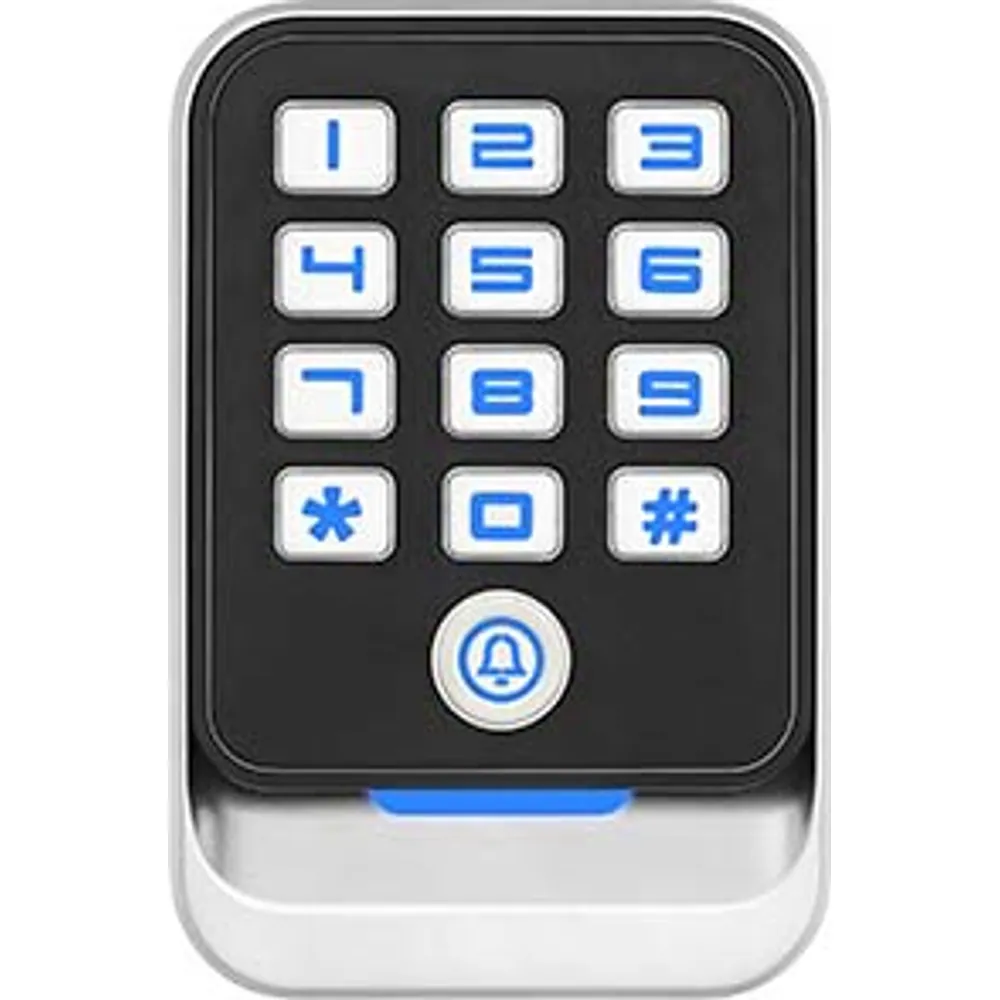
Card-plus-PIN reader in a 120 × 80 mm metal housing with physical keys, a doorbell button and Wiegand 26/34/66 output to your controller.
The CR-130 puts a card reader, a physical keypad and a doorbell button into one 120 × 80 × 22.67 mm metal housing. It suits entrances where the controller asks for card plus PIN, or where visitors need a bell push beside the reader and you would rather not mount a separate button.
Four credential versions are stocked. The -E reads 125 kHz EM4100, EM4102 and EM4200-compatible cards and fobs. The -M returns the UID of 13.56 MHz MIFARE Classic, DESFire, Plus, Ultralight, NTAG2xx and CPU cards. The -MS also reads protected MIFARE Classic 1K/4K sectors and CPU card files, ISO/IEC 15693 UIDs and the iCLASS CSN, and adds Wiegand 66. The -MS-FC extends that list to FeliCa UIDs.
Commissioning is done with a configuration card that selects the Wiegand format, read mode, card key and card-number format. A standalone card-issuing utility is offered as well and leaves your existing access software untouched. Response time is under 120 ms, and the design includes ESD and miswiring protection plus good tolerance of metal door frames.
Supply 12 V DC (±5%) and budget 200 mA. Leads: red +12 V, black GND, white D1, green D0, purple buzzer control, gray LED control, yellow for Wiegand 26/34 selection, and blue/orange for the doorbell button. PIN entries travel on the same Wiegand pair; the keypad output format is not listed on the datasheet, so give us your controller model and we confirm it before dispatch. No ingress rating is published.
| Frequency | 125 kHz (-E); 13.56 MHz (-M, -MS, -MS-FC) |
|---|---|
| Protocols | ISO/IEC 14443A, ISO/IEC 14443B, ISO/IEC 15693 |
| 125 kHz credentials | EM4100, EM4102, EM4200-compatible thick cards, thin cards and key fobs |
| 13.56 MHz UID read | MIFARE Classic Mini/EV1, MIFARE DESFire EV1/EV2/EV3/Light, MIFARE Plus S/X, MIFARE Ultralight/Ultralight C/Ultralight EV1, NTAG2xx; ISO/IEC 14443 CPU cards |
| Data read (-MS, -MS-FC) | Protected sector data of MIFARE Classic 1K/4K; file data of CPU cards (card key set by configuration card) |
| Other UIDs (-MS, -MS-FC) | ISO/IEC 15693 tags (e.g. ICODE); iCLASS card serial number (CSN) only |
| FeliCa (-MS-FC) | FeliCa card UID |
| Response time | < 120 ms once a card is inside the read zone |
| Output | Wiegand 26 / 34 (all versions); Wiegand 66 (-MS, -MS-FC) |
|---|---|
| Setup | Configuration card: Wiegand format, read mode, card key, card-number format |
| Controller inputs | Buzzer control, LED control |
| Format lead (yellow) | Wiegand 26 / 34 selection |
| Keypad | Physical (mechanical) keys |
| Doorbell | Bell button with separate blue/orange leads |
| Supply voltage | 12 V DC (±5%) |
|---|---|
| Operating current | ≤ 200 mA |
| Protection | ESD protection, miswiring protection; resists detuning by nearby metal |
| Dimensions | 120 × 80 × 22.67 mm (±0.3 mm) |
|---|---|
| Housing | Metal |
| Operating temperature | –10 to +60 °C |
| Storage temperature | –20 to +80 °C |
| Operating humidity | 15–90% RH |
| Ingress rating | Not specified (indoor or sheltered mounting) |
| Variant | 125 kHz EM | 13.56 MHz UID | MIFARE Classic / CPU data | ISO/IEC 15693 UID & iCLASS CSN | FeliCa UID | Wiegand output |
|---|---|---|---|---|---|---|
| CR-130-E | Yes | — | — | — | — | 26 / 34 |
| CR-130-M | — | MIFARE, NTAG, CPU | — | — | — | 26 / 34 |
| CR-130-MS | — | MIFARE, NTAG, CPU | Yes | Yes | — | 26 / 34 / 66 |
| CR-130-MS-FC | — | MIFARE, NTAG, CPU | Yes | Yes | Yes | 26 / 34 / 66 |
Choose the version by the credentials already in use on site. "CPU" = ISO/IEC 14443 CPU (smart) cards; iCLASS support is card serial number (CSN) only.
| Wire | Function |
|---|---|
| Red | +12 V DC |
| Black | GND |
| White | Wiegand D1 |
| Green | Wiegand D0 |
| Purple | Buzzer control input |
| Gray | LED control input |
| Yellow | Wiegand 26 / 34 selection |
| Blue + orange | Doorbell button leads |
Specifications can change between production batches. Confirm the current revision with us before placing volume orders.
Quote the SKU that matches your frequency, interface and mounting. Not sure? Send us your controller model and we will pick the variant for you.
| SKU | Configuration | Actions |
|---|---|---|
| CR-130-E | 125 kHz version: reads EM4100/EM4102/EM4200-compatible thick cards, thin cards and key fobs; Wiegand 26/34. | |
| CR-130-M | 13.56 MHz UID version: MIFARE Classic, DESFire EV1/EV2/EV3/Light, Plus S/X, Ultralight, NTAG2xx and ISO/IEC 14443 CPU card UIDs; Wiegand 26/34. | |
| CR-130-MS | 13.56 MHz secure-read version: all -M UIDs plus MIFARE Classic 1K/4K sector data and CPU card file data, ISO/IEC 15693 UID, iCLASS CSN only; Wiegand 26/34/66. | |
| CR-130-MS-FC | As -MS, plus FeliCa card UID (e.g. Octopus cards); Wiegand 26/34/66. |
Apartment building access control hardware: anti-clone readers with matched fob sets, QR visitor codes, 4G controllers for rentals and UHF tags for gates.
Elevator card readers for car panels and lift lobbies: anti-clone encrypted cards, QR codes for visitors, Wiegand or RS485 output to the floor controller.
The blue and orange leads come from the bell button. Connect them to the push-button input of your chime or intercom; they are separate from the power and Wiegand leads.
Key presses go out on the same Wiegand data pair as card numbers. The PIN format is not listed on the datasheet, so tell us your controller model and we check it before shipping.
All 13.56 MHz versions read the DESFire EV1/EV2/EV3/Light UID. None reads DESFire application data; for data-based checks use MIFARE Classic or CPU cards with -MS.
No ingress rating is given in its specification, so we do not quote one. For exposed doors, fit a rain cover or choose an outdoor-rated keypad reader.
Yes. The yellow lead switches between the two, and the configuration card covers the other settings, including Wiegand 66 on -MS versions.
Compare Wiegand, OSDP and RS485 reader interfaces: wiring, cable limits, AES-128 Secure Channel and steps for a compatible access-control migration.
125 kHz cards are cheap but easy to clone; 13.56 MHz cards add memory and, on DESFire-class chips, AES security. Compare range, chips, security and migration.
Wiegand 26-bit is an even parity bit, 8-bit facility code, 16-bit card number and odd parity bit. Convert card numbers to hex and back with the calculator.
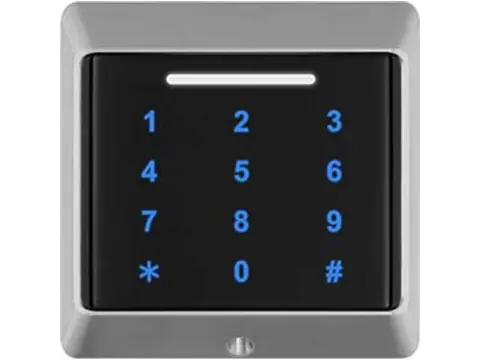
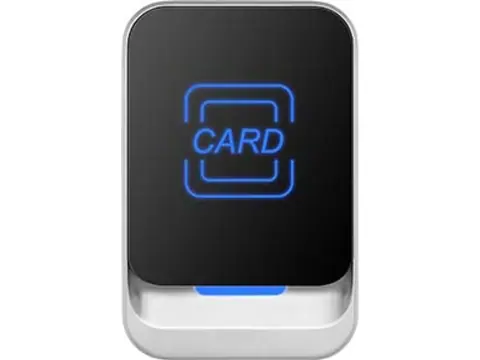
Square 89.5 mm touch-keypad reader for card plus PIN, reading up to 9 cm, in EM, MIFARE, sector-read, FeliCa and dual-frequency versions with Wiegand output.
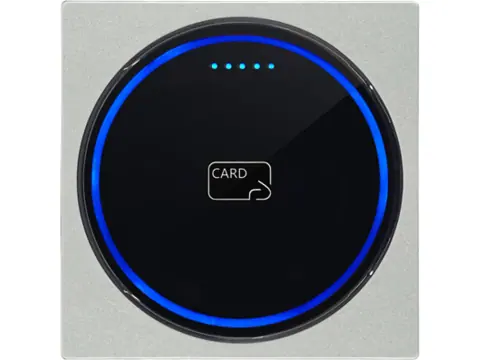
Slim 86 × 86 mm metal reader with OSDP v2.2, RS485, Wiegand and Bluetooth LE 5.3. Reads 125 kHz EM plus MIFARE, DESFire EV1–EV3, ICODE and FeliCa; IP65.
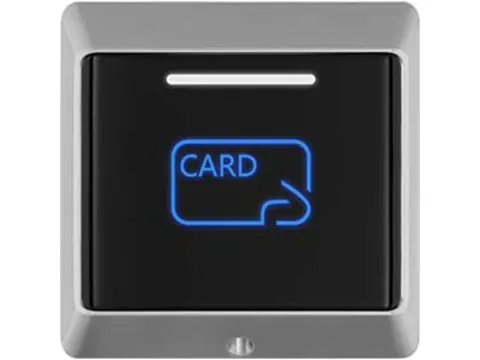
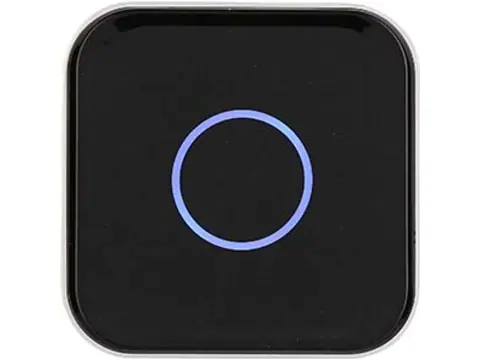
Card-only 89.5 mm square reader with Wiegand 26/34 output (66 on upper tiers), in EM, MIFARE, sector-read, FeliCa and dual-frequency versions.
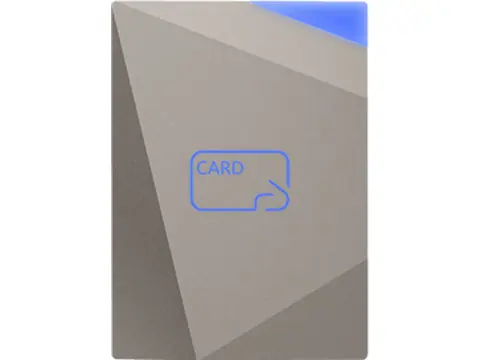
Faceted metal reader for harsh sites: –40 to +85 °C, IP65, 125 kHz + 13.56 MHz, Wiegand 26/34 and RS485, optional Bluetooth LE 5.1. Card-only or touch keypad.
Keyless 120 × 80 mm metal reader for EM or MIFARE cards. Outputs Wiegand 26/34 (66 on upper tiers) and is set up by swiping a configuration card.
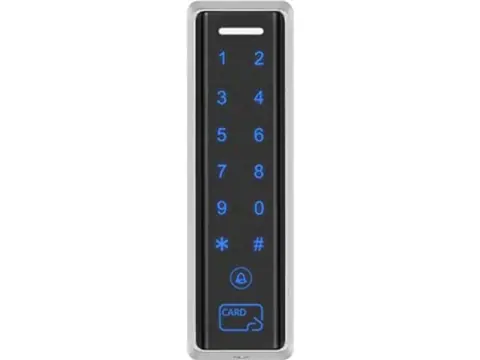
Slim 153 × 45 mm mullion reader with touch keypad and doorbell key, in 125 kHz EM or 13.56 MHz MIFARE versions with Wiegand 26/34/66 output.
Keyless 93 mm metal reader with Wiegand 26/34/66 output. Five versions cover 125 kHz EM, MIFARE-family UIDs, protected sector data, FeliCa numbers and LEGIC cards.
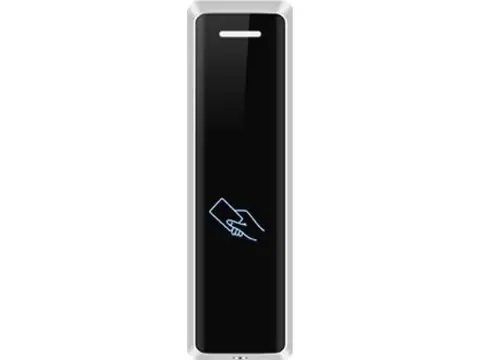
Card-only 153 × 45 mm mullion reader for narrow frames, in 125 kHz EM or 13.56 MHz MIFARE versions with Wiegand 26/34/66 output.
Send your card type, interface and quantity. You get a quote, lead time and compatibility notes within 24 hours — samples available for most items.