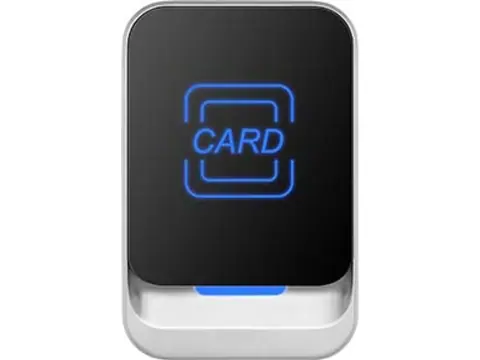
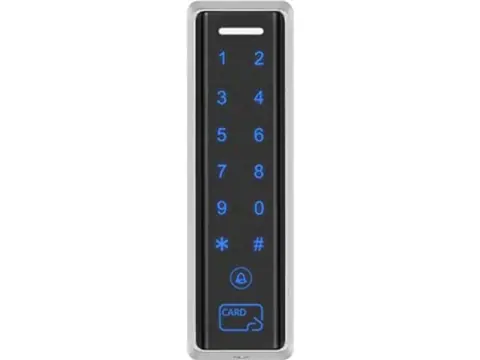
Plan access control from the site’s classified boundaries and equipment evidence, then select readers, circuits and door hardware. Moving a controlled entrance to an unclassified location can simplify the hardware requirements when the site design allows it. Our current TP-110 records contain supplier-reported Ex markings but no verified ATEX or IECEx certificate, so it is not a verified recommendation for installation inside a zone.
Define each read point before selecting hardware
An oil terminal or chemical plant can contain both classified and unclassified locations. Obtain the classification at the reader, lock, exit device, junction box and proposed controller enclosure. Include the relevant gas or dust, required equipment protection level (EPL), ignition-temperature data and ambient conditions.
The usual zone relationships below are selection inputs, subject to the site’s assessment and the equipment’s complete conditions. They do not authorize an installation from the zone number alone.
| Classified location |
Usual acceptable EPLs |
Additional evidence to review |
| Gas Zone 0 |
Ga |
Gas subgroup, temperature, exact equipment and circuit scope |
| Gas Zone 1 |
Ga or Gb |
Same checks; required national conformity route |
| Gas Zone 2 |
Ga, Gb or Gc |
Same checks; all conditions for the proposed configuration |
| Dust Zone 20 |
Da |
Dust subgroup, cloud/layer ignition data and accumulation |
| Dust Zone 21 |
Da or Db |
Same checks; equipment temperature and installation conditions |
| Dust Zone 22 |
Da, Db or Dc |
Same checks; environment and inspection requirements |
Higher EPL satisfies only the protection-level check. It does not remove group, temperature, ambient, accessory or certificate restrictions. Gas and dust suitability are separate. In the EU, the workplace and equipment directives have distinct roles; for other jurisdictions, confirm the locally accepted approval and installation framework. The reader-selection guide explains the markings and document routes.
Choose a system layout
A common arrangement uses an approved field reader at a classified door and ordinary control equipment in an unclassified panel. It is not the only possible layout: suitably protected equipment can be placed elsewhere when its own approval and the system design allow it. Review the actual placement rather than writing “controller must be in the safe area” into every specification.
For an intrinsically safe design, the assessment covers the whole connected circuit. Reader, associated apparatus, power and signal connections, cable properties and accessories must be documented together. An external Zener barrier or galvanic isolator may form part of that design; it is not a universal add-on selected solely from the reader’s voltage.
For an ordinary safe-area door, the usual controller, reader, lock and supply checks still apply. Keep classified-area evidence and functional compatibility as separate requirements: a working Wiegand connection does not demonstrate explosion protection, and an accepted certificate does not guarantee the software receives the expected credential number.
Select hardware by location
| Proposed location |
Procurement starting point |
Decision before release |
| Door or gate inside a classified area |
Equipment and circuit approved for that location |
Complete conformity evidence and competent system review |
| Door on an unclassified side of the boundary |
Appropriate catalog reader, lock and controller |
Classification, exposure, release circuit and credential compatibility |
| Gatehouse or fence-line turnstile |
Reader options for staff and visitors |
Confirm the location and entry/exit workflow |
| Unclassified vehicle lane |
Integrated UHF reader and matching tags |
Read-zone test, permitted RF configuration and host interface |
| Controller panel |
Supply, enclosure and board for its actual location |
Location suitability, power budget, cable routes and maintenance access |
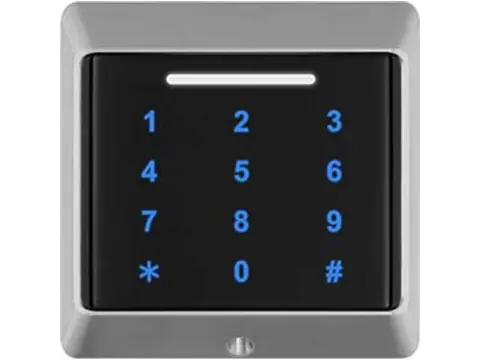
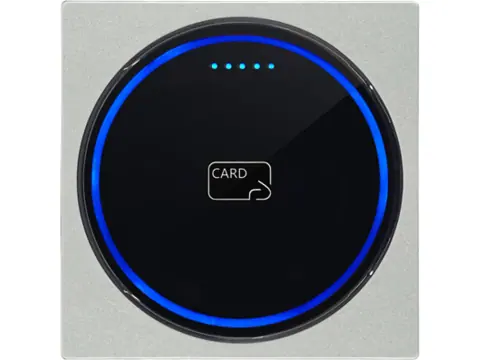
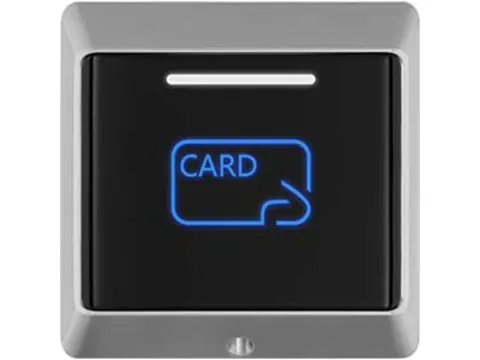
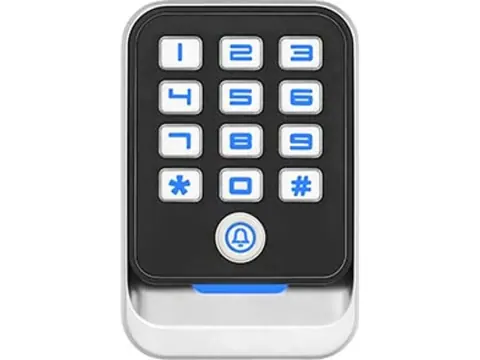
TP-110’s supplier record reports Ex ia IIC T6 Ga, a dust marking, LF/HF card reading and Wiegand 34/66 or RS485 output. We cannot substantiate certified zone suitability or its claimed installation without an external barrier until acceptable documents are available. Keep classified-area equipment selection open; use the reader category only to identify document-review candidates.
At unclassified vehicle lanes, evaluate integrated UHF readers with the actual vehicles and tags. A gate address does not prove it lies outside nearby process or loading zones. Confirm both location and regional radio configuration before purchase.
Verify circuits, accessories and records
For an IS system, request the certified device parameters and system documents. Cable capacitance and inductance, permitted parameter combinations and all connected channels affect the assessment. Zener barriers commonly require a high-integrity IS earth; galvanic isolation does not remove every bonding, shielding or functional-earth obligation. Follow the selected design and instructions instead of using a generic resistance or spacing rule.
Locks and release devices deserve their own review. Simple passive contacts may be assessed as simple apparatus in an IS circuit, but a powered sensor, illuminated button or lock must not be assumed to qualify. Agree normal unlocking, loss-of-power behavior and emergency release with the site’s door and safety design.
Check ambient conditions, dust accumulation, cleaning and accessory requirements. General operating-temperature figures do not establish certified Ex limits. Covers and mounting changes need review for electrostatic and other effects rather than automatic acceptance or rejection.
Entry and exit records can support occupancy reconciliation and mustering. Missing reads, emergency exits, tailgating and network failures can make the access database incomplete. Define how staff reconcile exceptions and perform drills; anti-passback is a control feature, not proof of an accurate emergency headcount. The networked controller range provides local access-event storage, while the muster process and software require separate evaluation.
Prepare a reviewable RFQ
We can help check catalog interfaces, assemble safe-area hardware options and identify evidence missing from an Ex candidate. Safe-area bench samples can test credentials and communication; they do not qualify equipment for a classified location. Send the RFQ with the documents your project requires so the quotation distinguishes available hardware from outstanding approval evidence.
Sources
Technical and regulatory review date: October 1, 2026.