ABS RFID Key Fob, 125 kHz / 13.56 MHz
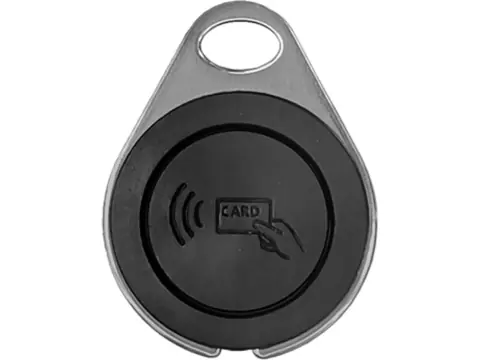
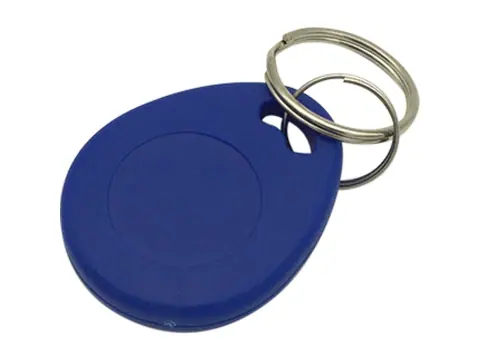
Pocket-size ABS key fob credentials with LF or HF chip options, custom colors and identification printing; listed read distance is 5–10 cm.
Send us your controller model, card type and install environment. We'll shortlist compatible hardware and quote within 24 hours.
Cards, fobs and wristbands with desktop readers for enrollment and encoding. Match the credential chip, read mode and output number to the installed system before specifying printing or a replacement batch.
Pocket-size ABS key fob credentials with LF or HF chip options, custom colors and identification printing; listed read distance is 5–10 cm.
Stainless-steel and ABS key fobs with five chip configurations, including DESFire EV3; listed read distance is 0–3 or 0–4 cm by chip.
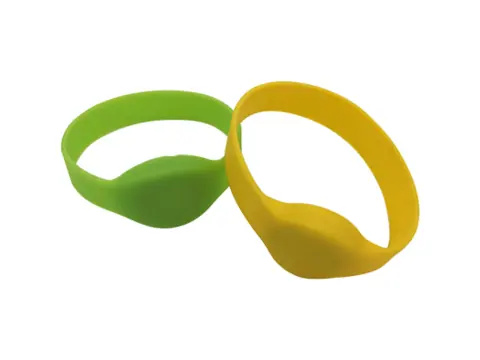
Wearable LF or HF credentials with 65 or 74 mm diameter options, multiple colors and a listed 2–5 cm reading distance.
13.56 MHz ISO/IEC 14443A NFC cards using NTAG213 or NTAG216, with custom artwork, data writing and a 0–5 cm listed read distance.
Custom round, square or irregular RFID credentials with LF, HF or UHF chip options and configurable printing, coding and finish.
Custom printed RFID cards with a transparent epoxy finish, LF or HF chip choices and a listed reader distance of 0–5 cm.
Fixed-number 125 kHz proximity credentials for compatible readers, offered in thin, thick and custom card formats.
Classic 1K-compatible credentials with 16 sectors and two key sets per sector, in an 86 × 54 × 0.87 mm PVC/PET format.
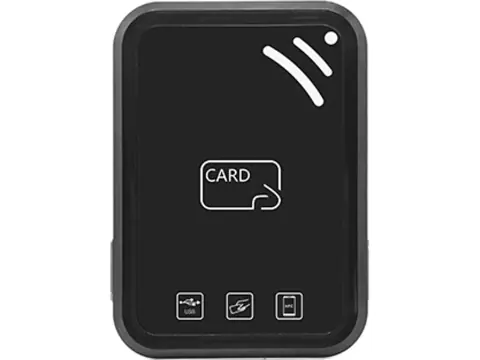
One desktop unit for 125 kHz EM and 13.56 MHz MIFARE, DESFire, ICODE, CPU and NFC Forum tags, with switchable USB HID/CDC modes and active or command-driven reading.
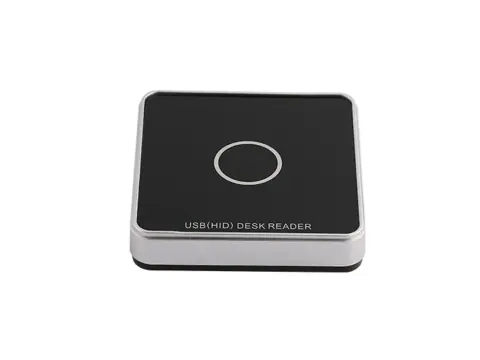
Metal-framed USB desktop reader in five versions, from 125 kHz EM and 13.56 MHz UID read-only up to MIFARE sector, DESFire, NTAG and ICODE read/write. Driver-free.
HF desktop reader/writer for MIFARE, DESFire, FeliCa, ICODE, CPU and NFC Forum Type 1–5 tags, with two SAM slots, 0–4 cm range and switchable USB HID/CDC.
Square 107 mm USB desktop reader: 125 kHz EM or 13.56 MHz UID read-only versions, plus encoders for MIFARE Classic sectors, CPU cards, DESFire EV1 files and NTAG.
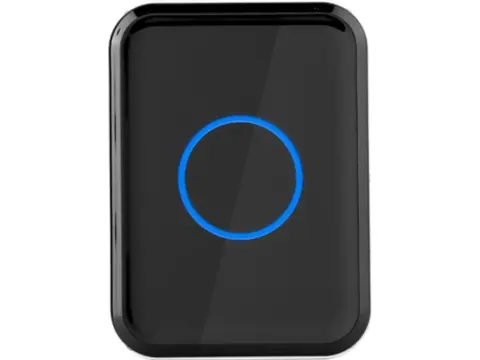
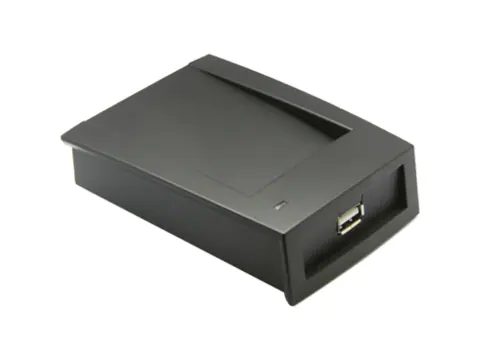
Entry-level USB desktop card reader in 125 kHz EM, 13.56 MHz UID and dual-frequency versions; one dual model also writes MIFARE Classic sectors. Driver-free.
A credential order begins with the reader and the data your system expects, not the printed card design. Cards with the same shape can use different frequencies, chips and memory arrangements. The desktop device used to enroll them must also produce the number or authenticated data required by the site.
The card and fob range includes read-only LF cards, HF memory and NFC cards, CPU-card options, fobs and wearable formats. Choose a confirmed chip configuration for the required application. A CPU card should not be treated as interchangeable with a DESFire card, and sharing a carrier frequency does not establish protocol or application compatibility.
For a replacement batch, provide a sample credential and the reader configuration. Check the enrolled number, byte order and any facility-code treatment. If the system reads protected data, establish the key and encoding requirements through an authorized process. Printing and visible serial numbers must be mapped to the electronic record rather than assumed to match it.
USB readers cover number capture and selected encoding tasks. Keyboard mode types into the active field; it is useful for enrollment but does not itself write card memory. Command-based read/write devices need a supported tool or host integration. Compare the exact model and interface mode with the software used at reception or the issuing desk.
Evaluate the entire workflow with samples: present the credential, enroll it, verify the stored number and test it at the real door. For encoded credentials, read back the programmed data before accepting the batch. The USB output-format guide explains common enrollment mismatches, while the card-frequency guide helps distinguish the radio options.
125 kHz cards are cheap but easy to clone; 13.56 MHz cards add memory and, on DESFire-class chips, AES security. Compare range, chips, security and migration.
Wiegand 26-bit is an even parity bit, 8-bit facility code, 16-bit card number and odd parity bit. Convert card numbers to hex and back with the calculator.
MIFARE Classic's Crypto1 is broken and its cards can be copied; DESFire EV2/EV3 support AES-128. Compare security, memory and cost, then plan your migration.
Apartment building access control hardware: anti-clone readers with matched fob sets, QR visitor codes, 4G controllers for rentals and UHF tags for gates.
Elevator card readers for car panels and lift lobbies: anti-clone encrypted cards, QR codes for visitors, Wiegand or RS485 output to the floor controller.
Gym access control system hardware for 24/7 clubs: fob and wristband readers, face and QR terminals, anti-passback controllers and no-touch exit buttons.
Frequency is only one check. Specify the chip or credential format, the reader’s supported operations and whether the system uses a UID or protected data.
It must be specified and verified. Readers may format the electronic identifier differently, so confirm the data mapping before printing or enrolling a batch.
No. UID capture and memory writing are different functions. Select a reader/writer with commands for the actual chip and provide the authorized keys where required.
Yes. Use a sample set to check enrollment output, any encoding step and reading at the installed entrance. Keep the accepted configuration with the batch specification.
Send your card type, interface and quantity. You get a quote, lead time and compatibility notes within 24 hours — samples available for most items.