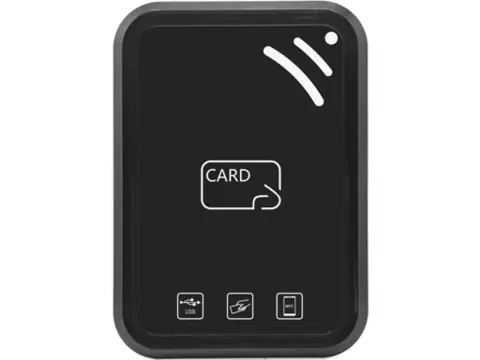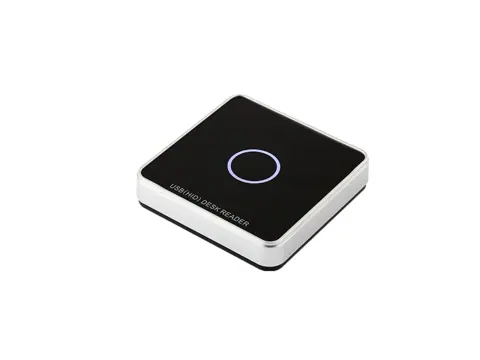
USB UHF RFID Desktop Reader/Writer, HID Keyboard Output
Driver-free USB desktop UHF reader/writer that types EPC, TID or USER data into any software. 0–8 cm range for controlled enrollment; US and EU band versions.
Send us your controller model, card type and install environment. We'll shortlist compatible hardware and quote within 24 hours.
USB desktop readers and writers for UHF enrollment and encoding at a controlled work area. Match the regional band, output format and command mode to the software workflow.
Driver-free USB desktop UHF reader/writer that types EPC, TID or USER data into any software. 0–8 cm range for controlled enrollment; US and EU band versions.
Compact USB desktop UHF reader/writer and card issuer: 2 dBi antenna, 13 dBm output, 0–30 cm reads, driver-free on Windows, Linux and Android. EU or US band.
EW desktop units bring one UHF tag to the operator’s desk for enrollment or encoding. Their shorter read areas help separate the presented tag from neighboring stock, but the operator must still check that only the intended tag is in the field.
Keyboard output can enter a tag number into an existing software field. Writing EPC memory instead needs a supported command workflow and a writable tag. Confirm the tool or SDK, output bytes and number format before using the writer for a site rollout.
Choose the band for the country where the unit operates and tags suitable for their final installation. If a lane reader outputs selected data as Wiegand, enrollment must use the same number. The UHF encoding guide explains write, verification and numbering checks.
Compare UHF RFID reader bands by country, including US, EU, UK, China, India and Japan. Understand ERP, EIRP, channel conditions and radio approvals.
Wire a UHF reader's D0, D1 and ground to your controller, match 26/34-bit Wiegand, size 12 V power and trigger the barrier by relay. Diagrams included.
Yes, RFID works on metal with tags built for it. See why metal detunes standard tags, compare ABS, PCB, ceramic and label tags, and test read range properly.
Plan an RFID vehicle access control system: UHF windshield tags, long-range lane readers, Wiegand controllers and barrier triggering. Lane BOM and samples.
Plan RFID for warehouse management: fixed readers and circular antennas at dock doors, conveyor tunnels, handheld cycle counts and on-metal asset tags.
Build an RFID asset tracking system: on-metal, ceramic and tie-on tags matched to each asset, handheld audits, smart cabinets and IP67 HF heads for tooling.
Keyboard mode is an output workflow. Encoding requires the reader/writer’s supported command mode or tool and the appropriate writable tag memory.
Not necessarily. Match the selected tag data, byte order and output format to the gate reader before enrolling credentials.
Keep blanks outside the active read area and verify the intended tag before writing. Nearby tags can be read or targeted unintentionally if the workflow is not controlled.
Send your card type, interface and quantity. You get a quote, lead time and compatibility notes within 24 hours — samples available for most items.