RFID linen tracking puts a washable passive UHF tag on every sheet, towel, gown and uniform, so readers can count an entire cart or bag in seconds instead of item by item. A typical system has laundry tags sewn into each item, fixed readers with antennas at sorting and dispatch points, handhelds for linen-room counts and software that reconciles every count. We supply the tags and reader hardware for hotels, hospitals, industrial laundries and uniform-rental operations; the laundry management software comes from your software provider.
Why manual linen counts break down
Linen moves in bulk between the user and the laundry: soiled out, clean back, often across several sites and carts a day. Hand counting that volume is slow, and when counts are skipped nobody can say where items went missing or who should pay for them. Hotels dispute invoices with outsourced laundries, hospitals lose gowns and scrubs between wards, and uniform-rental firms cannot prove which garment went to which wearer.
Barcodes help only a little, because each label still needs line of sight and one scan per item. UHF RFID, which follows EPC Gen2 (ISO/IEC 18000-63), reads through fabric and bags without line of sight and can inventory many tags per second. The trade-offs are specific to laundry:
- Harsh processing. Tags go through wash chemistry, press extraction, tumble drying and ironing many times over the item’s life.
- Dense, damp loads. Water absorbs UHF, and tightly stacked items shield one another.
- Stray reads. A reader that sees too far counts the next cart as well.
How an RFID linen system is laid out
Every installation follows the same chain: laundry tag → antenna → UHF reader → software.
- Laundry tag. A passive UHF tag sewn or sealed into each item. Its EPC memory holds the item number, and on most current chips the TID, written by the chip maker, includes a unique serial.
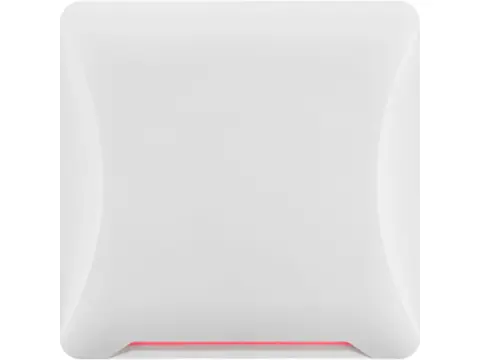
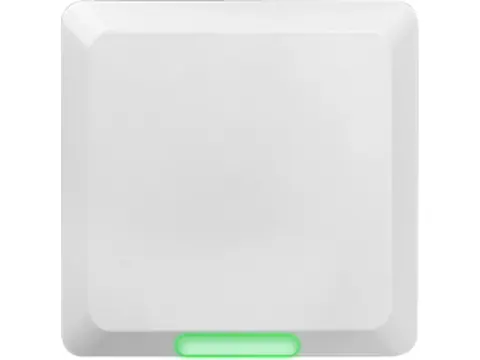
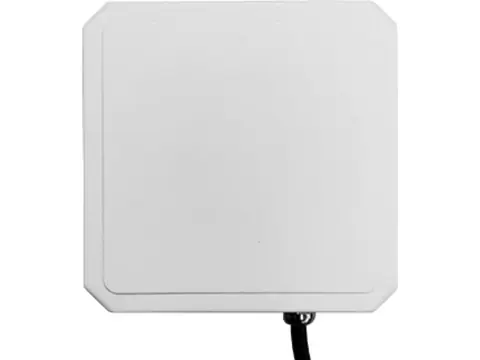
- Antennas. Circular-polarized antennas around a tunnel, above a sorting table or inside a cabinet define where tags are read. Because linen lands at random angles, circular polarization matters here; see circular vs linear antennas.
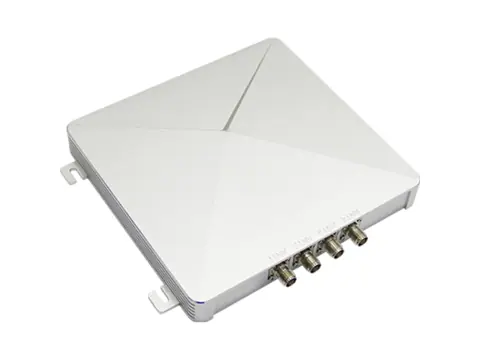
- UHF reader. A fixed multi-port reader drives four or eight antennas and reports every tag it sees, while handhelds cover spot checks and stock counts.
- Software. The laundry or linen management system links each tag number to an item type and owner, compares counts with orders and flags shortages.
Tagging comes first. At a tagging station a USB desktop UHF writer reads each new tag, optionally encodes a serialized EPC, and registers it against the item before it goes into circulation.
| Tag format |
Build |
Typical items |
Points to check |
| Sewn fabric (textile) tag |
Thin, flexible, stitched or heat-sealed like a care label |
Sheets, towels, table linen, garments |
Wash-cycle and pressure ratings; ironing rating; band |
| Silicone tag |
Sealed, flexible, thicker than fabric |
Workwear, mops, heavier textiles |
Temperature rating; attachment method; band |
| PPS button |
Rigid polyphenylene sulfide (PPS) disc |
Uniforms, workwear, items that tolerate a hard tag |
Button size and feel; press rating; placement away from ironer rolls |
Before ordering in volume, run this checklist against your own process:
- Maximum wash temperature and chemistry, including any hospital disinfection cycle
- Press-extraction pressure and tumble-dryer temperature
- Flatwork ironer or tunnel finisher exposure, and autoclave cycles for sterilized items
- Rated number of wash cycles compared with the item’s expected service life
- Frequency band the tag is specified for, not just the reader’s band
- Where the tag sits on the item: a hem or corner for flat linen, an inside seam for garments
Wash-test a batch of samples through your real process, then read them at your planned read points. The range of laundry and garment tags covers fabric, silicone and PPS button formats.
Hardware selection by zone
| Location |
Recommended hardware type |
Key spec to check |
| Soiled-linen intake and sorting |
Fixed reader at reduced power with low-gain antennas under the sorting table |
Read zone small enough to count one customer’s items at a time |
| Clean-side dispatch tunnel |
8-port fixed reader in a shielded tunnel with antennas on several sides |
Antenna count and layout; GPIO for cart sensor and stack light |
| Conveyor or bag rail |
4-port fixed reader with antennas along the line |
Read rate at line speed; trigger input |
| Hotel or ward linen room |
Android UHF handheld reader |
Band variant; battery for a full count; app or SDK |
| Uniform or scrubs dispensing cabinet |
Fixed reader with PCB antennas inside the cabinet |
Read coverage of every shelf; cabinet shielding |
| Tagging station |
USB desktop UHF reader/writer |
Same band as site readers; EPC write support |
| Every item |
Laundry tag suited to the item and wash process |
Wash, temperature and pressure ratings; band |
Pair fixed readers with suitable UHF antennas: compact circular-polarized panels for tunnels and PCB antennas for cabinets. For floor counts, handheld UHF readers run Android apps and scan barcodes too.
Integration and installation notes
Contain the read zone. A tunnel lined with metal keeps RF inside, so carts waiting outside stay uncounted. Set reader power to the lowest level that reads a full cart reliably, and use a photo-eye on a GPIO input to start and stop each inventory.
Read dry linen. Plan read points at soiled intake and at clean dispatch, where items are dry. If you must read damp items, test with realistic moisture levels and expect lower read rates.
Verify counts, not just reads. Dense stacks and metal cart frames can hide tags. Compare every count with the expected quantity, re-scan exceptions and test with your own carts, bags and load sizes.
Match the regional band. Readers ship in 902–928 MHz (FCC) or 865–868 MHz (ETSI) versions, and some laundry tags are specified for 902–928 MHz only. Check both before ordering; our UHF frequency by country guide lists other bands.
Plan the software link. Fixed readers connect over TCP/IP or RS232. Ask for the command protocol or SDK early, so your software team can confirm how reads, antenna numbers and GPIO events arrive.
Avoid reader interference. Where several readers operate close together, separate their antennas and enable dense-reader settings if the reader supports them.
Typical bill of materials
Per laundry plant
- Fixed 4- or 8-port UHF reader for each tunnel, conveyor or sorting station, in the regional band
- Circular-polarized antennas and low-loss coaxial cables sized to the tunnel
- Photo-eye sensor and stack light wired to the reader’s GPIO
- USB desktop UHF reader/writer for the tagging station
- Handheld UHF readers for audits and exception checks
Per customer site (hotel, hospital, uniform user)
- Handheld UHF reader for linen-room counts
- Optional cabinet reader with internal PCB antennas for dispensing uniforms or scrubs
Per item
- Laundry tag in the format that suits the item, plus spares for replacement items
Not supplied: laundry management software, shielded tunnel enclosures, carts, conveyors and sewing or heat-seal equipment.
- Band-matched order. Tags, readers, handhelds and the desktop writer are specified for the same regional band.
- Samples for wash and read tests. Run sample tags through your own process and read them with a sample reader before committing.
- Compatibility checked before dispatch. We confirm reader output settings and test hardware before shipping.
- Mixed orders. Tags, readers, antennas, cables and handhelds arrive in one quote and one shipment.
- Encoding on request. Ask about serialized EPC encoding so tag numbers match your software’s item records.
Next steps
Tell us the installation country, the item types and quantities to tag, your wash process (maximum temperatures, press, drying, ironing, any autoclave cycle), the read points you plan and how your software connects to readers. We’ll suggest tag formats to wash-test and a reader and antenna layout per read point. Request a quote and we’ll reply within 24 hours.