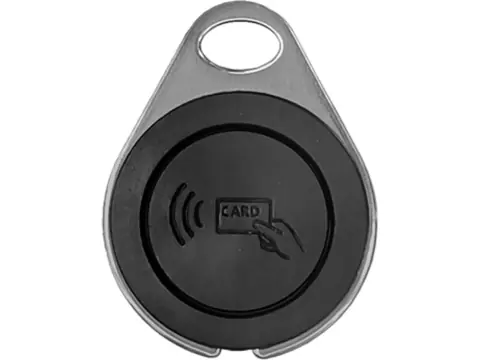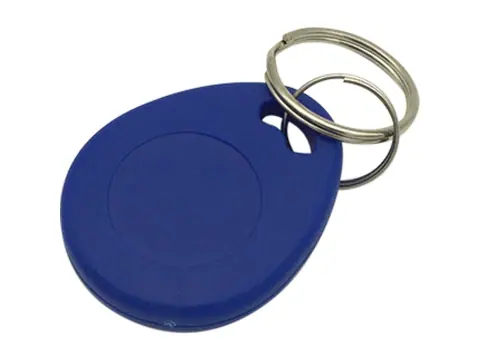
ABS RFID Key Fob, 125 kHz / 13.56 MHz
Pocket-size ABS key fob credentials with LF or HF chip options, custom colors and identification printing; listed read distance is 5–10 cm.
Send us your controller model, card type and install environment. We'll shortlist compatible hardware and quote within 24 hours.
LF and HF cards, fobs and wearable credentials, with chip-specific and custom-format options. Select the electronic configuration first, then agree printing, numbering and any encoding work.
Pocket-size ABS key fob credentials with LF or HF chip options, custom colors and identification printing; listed read distance is 5–10 cm.
Stainless-steel and ABS key fobs with five chip configurations, including DESFire EV3; listed read distance is 0–3 or 0–4 cm by chip.
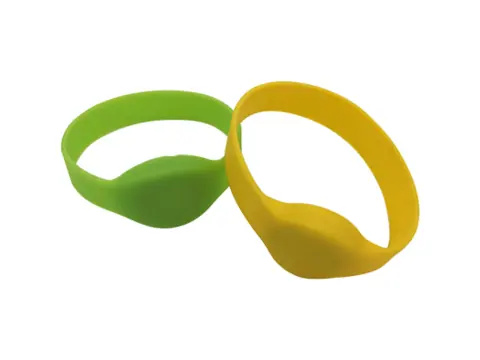
Wearable LF or HF credentials with 65 or 74 mm diameter options, multiple colors and a listed 2–5 cm reading distance.
13.56 MHz ISO/IEC 14443A NFC cards using NTAG213 or NTAG216, with custom artwork, data writing and a 0–5 cm listed read distance.
Custom round, square or irregular RFID credentials with LF, HF or UHF chip options and configurable printing, coding and finish.
Custom printed RFID cards with a transparent epoxy finish, LF or HF chip choices and a listed reader distance of 0–5 cm.
Fixed-number 125 kHz proximity credentials for compatible readers, offered in thin, thick and custom card formats.
Classic 1K-compatible credentials with 16 sectors and two key sets per sector, in an 86 × 54 × 0.87 mm PVC/PET format.
CPU-based 13.56 MHz cards with a chip operating system, 4K–32K memory choices and configurable card material and finish.
Credential formats in the CA range include standard cards, ABS and stainless-steel fobs, epoxy and custom-shaped cards, and soft wristbands. Their chip choices vary by family. For example, a stainless fob can be ordered with different LF or HF chips; that does not mean one fob contains every listed technology.
Match the exact card chip and reader operation. A read-only EM-style credential, a Classic-compatible memory card, an NTAG NFC card and a CPU card serve different workflows. CPU-card memory size alone does not establish the command set or application compatibility.
For a replacement order, verify sample credentials against the installed reader and software before committing to artwork. Define printed numbers, electronic identifiers and any pre-encoding separately. The Classic versus DESFire guide provides context for specifying authenticated-card projects.
125 kHz cards are cheap but easy to clone; 13.56 MHz cards add memory and, on DESFire-class chips, AES security. Compare range, chips, security and migration.
Wiegand 26-bit is an even parity bit, 8-bit facility code, 16-bit card number and odd parity bit. Convert card numbers to hex and back with the calculator.
MIFARE Classic's Crypto1 is broken and its cards can be copied; DESFire EV2/EV3 support AES-128. Compare security, memory and cost, then plan your migration.
Apartment building access control hardware: anti-clone readers with matched fob sets, QR visitor codes, 4G controllers for rentals and UHF tags for gates.
Elevator card readers for car panels and lift lobbies: anti-clone encrypted cards, QR codes for visitors, Wiegand or RS485 output to the floor controller.
Gym access control system hardware for 24/7 clubs: fob and wristband readers, face and QR terminals, anti-passback controllers and no-touch exit buttons.
No. Most listed chip choices are separate ordered configurations. Confirm any actual multi-chip construction explicitly.
Not by assumption. The chips and memory operations differ. Confirm what the installed reader and application require.
No. Specify the actual card operating system, commands and key requirements. A generic CPU-card option should not be treated as a DESFire substitute.
Send your card type, interface and quantity. You get a quote, lead time and compatibility notes within 24 hours — samples available for most items.