RFID Vehicle Access Control & Parking
Plan an RFID vehicle access control system: UHF windshield tags, long-range lane readers, Wiegand controllers and barrier triggering. Lane BOM and samples.
Send us your controller model, card type and install environment. We'll shortlist compatible hardware and quote within 24 hours.
One UHF reader module for both 865–868 MHz and 902–928 MHz builds: 7–30 dBm output (±1 dB), sensitivity below −85 dBm, hardware watchdog and TTL UART.
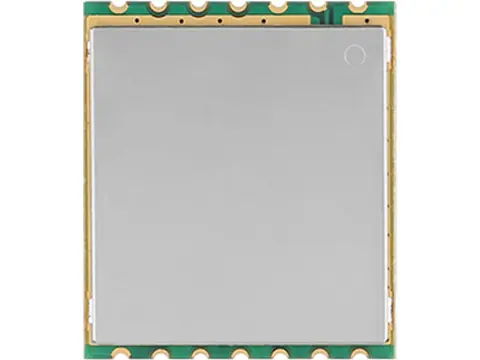
The GM-150 is a US/EU dual-band UHF RFID reader module: one part covers both the ETSI 865–868 MHz and FCC 902–928 MHz bands, so an OEM can stock a single module for European and North American builds instead of two. It fits parking and vehicle-access readers, barrier-gate readers and other fixed devices that need a mid-to-long-range EPC Gen2 engine behind a TTL UART.
Output power is adjustable from 7 to 30 dBm with ±1 dB accuracy and ±0.2 dB flatness, and receiver sensitivity is below −85 dBm. The module reads 915 MHz long-range UHF cards, and inventory peaks above 100 tags per second. Next to its multi-tag algorithm, the firmware includes an optimization for scenes with only a few tags in the field, which shortens response time when a single vehicle tag arrives at a barrier.
A dual-CPU design polls tags and passes data to the host in parallel. A hardware watchdog supervises the processor for year-round unattended operation, and the RF power amplifier is monitored so it does not run into saturation during long duty cycles.
Supply 4.5–5.5 V DC. Specified operating current ranges from 300 mA to 2.5 A, so size the regulator for the upper figure. The UART runs at 115200 bps by default, with 38400 bps available. The board measures 56 × 36.5 mm (±1 mm) and is rated for −25 to +70 °C operation. Region plans for FCC, ETSI EN 302 208, China, Korea and Malaysia are listed.
| Frequency range | 902–928 MHz and 865–868 MHz (same module) |
|---|---|
| Region plans listed | FCC (US, Canada), ETSI EN 302 208 (Europe), China, Korea, Malaysia |
| Air protocol | EPCglobal UHF Class 1 Gen 2 / ISO 18000-6C |
| Supported cards | EPC Gen2 tags, including 915 MHz long-range UHF cards |
| Output power | 7–30 dBm |
| Output power accuracy | ±1 dB |
| Output power flatness | ±0.2 dB |
| Receiver sensitivity | < −85 dBm |
| Peak inventory speed | > 100 tags/s |
|---|---|
| Algorithms | Multi-tag inventory algorithm; optimized algorithm for few-tag scenes |
| Architecture | Dual CPU (tag polling and data output in parallel) |
| Supervision | Hardware watchdog; RF power-amplifier saturation monitoring |
| Host interface | UART, TTL level |
|---|---|
| Baud rate | 115200 bps (default), 38400 bps |
| Supply voltage | 4.5–5.5 V DC |
|---|---|
| Operating current | 300 mA–2.5 A |
| Dimensions | 56 × 36.5 mm (±1 mm) |
|---|---|
| Operating temperature | −25 to +70 °C |
| Storage temperature | −30 to +80 °C |
| Relative humidity | 5–85% (at +25 °C) |
Specifications can change between production batches. Confirm the current revision with us before placing volume orders.
Quote the SKU that matches your frequency, interface and mounting. Not sure? Send us your controller model and we will pick the variant for you.
| SKU | Configuration | Actions |
|---|---|---|
| GM-150-US-EU | Dual-band module, 865–868 MHz and 902–928 MHz in one part, TTL UART |
Plan an RFID vehicle access control system: UHF windshield tags, long-range lane readers, Wiegand controllers and barrier triggering. Lane BOM and samples.
Plan RFID for warehouse management: fixed readers and circular antennas at dock doors, conveyor tunnels, handheld cycle counts and on-metal asset tags.
Build an RFID asset tracking system: on-metal, ceramic and tie-on tags matched to each asset, handheld audits, smart cabinets and IP67 HF heads for tooling.
No. GM-150-US-EU covers both 865–868 MHz and 902–928 MHz in the same module, so one part number serves both markets. Let us know the destination country so we can confirm the regional channel settings before shipping.
Operating current is specified at 300 mA to 2.5 A on a 4.5–5.5 V DC rail. Size the regulator for 2.5 A to leave headroom at full output power.
Output power is adjustable from 7 to 30 dBm with ±1 dB accuracy and ±0.2 dB flatness.
A hardware watchdog supervises the CPU, and the RF power amplifier is monitored to keep it out of saturation. Operating temperature is −25 to +70 °C.
Compare UHF RFID reader bands by country, including US, EU, UK, China, India and Japan. Understand ERP, EIRP, channel conditions and radio approvals.
Wire a UHF reader's D0, D1 and ground to your controller, match 26/34-bit Wiegand, size 12 V power and trigger the barrier by relay. Diagrams included.
Yes, RFID works on metal with tags built for it. See why metal detunes standard tags, compare ABS, PCB, ceramic and label tags, and test read range properly.
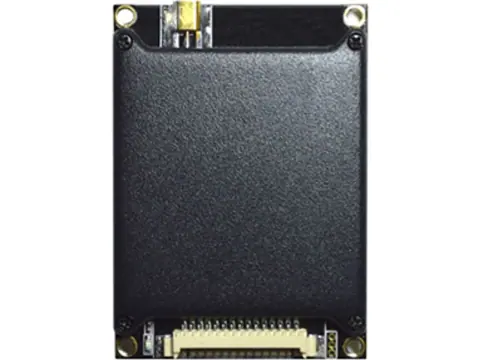
Embeddable single-antenna UHF reader engine on the Impinj R2000: 0–33 dBm output, more than 700 tags/s and a 15-pin TTL UART header, in FCC and ETSI versions.
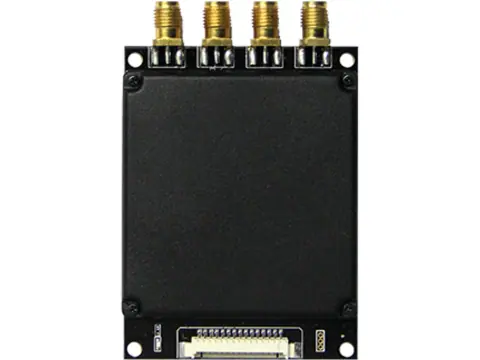
Four-antenna UHF reader engine on the Impinj R2000 for smart cabinets, shelf readers and portals: 0–33 dBm, 700+ tags/s, TTL UART, FCC and ETSI versions.
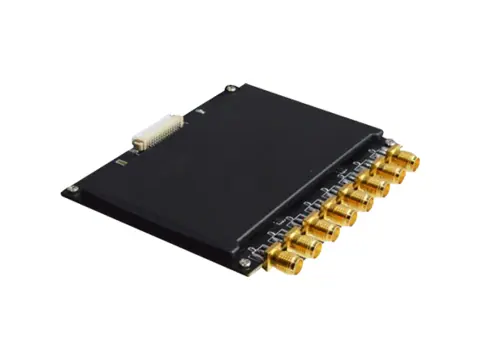
Eight-antenna UHF reader engine on the Impinj R2000 for multi-shelf cabinets and tunnel readers: 0–33 dBm, 700+ tags/s, 1,000-tag buffer, TTL UART.
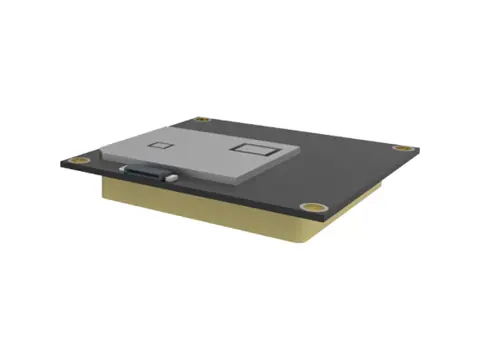
50 × 50 mm integrated UHF RFID module for handhelds and desktop card issuers: 18–26 dBm, 100–250 mA, TTL UART, reads up to 3 m with no heatsink. US and EU versions.
Stamp-sized 23 × 20 mm UHF RFID reader module for US-band (902–928 MHz) devices: 18–26 dBm, sensitivity below −85 dBm, TTL UART and a hardware watchdog.
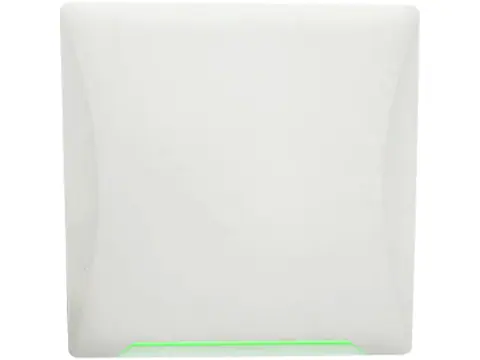
IP66 integrated UHF reader that identifies vehicle tags at up to 12 m (9 dBi) or 30 m (12 dBi), with Wiegand 26/34, RS485, USB and optional TCP/IP.
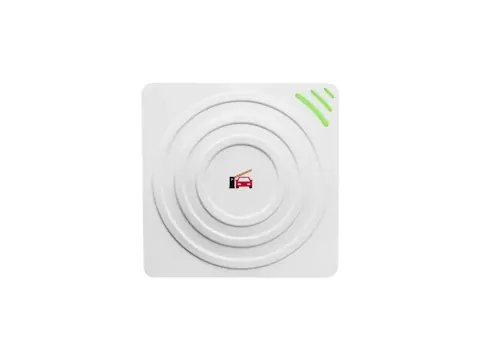
IP66 all-in-one UHF reader and access controller: stores 5,000 users, controls the gate lock, opens by Bluetooth and reads tags at up to 10 m or 20 m.
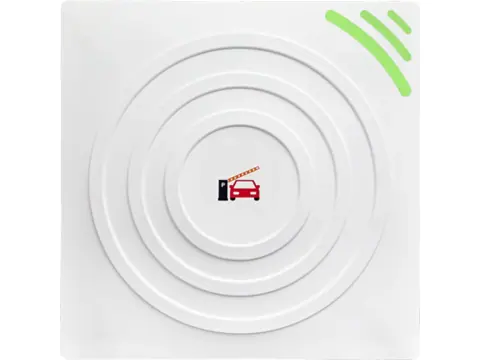
445 mm IP66 integrated UHF reader with a 12 dBi linear antenna that reads vehicle tags at 10–20 m and reports over Wiegand, RS485 or optional TCP/IP.
Send your card type, interface and quantity. You get a quote, lead time and compatibility notes within 24 hours — samples available for most items.